
Sunflower Neurolymph Therapy Provider Spotlight, October 2026
By Valerie Briggs
Dentistry is more than teeth
When most of us think about going to the dentist, we think about cleanings, cavities, crowns, whitening, or needing a tooth fixed because of pain. Oral health involves much more than the teeth. The mouth is part of a larger functional system involving the jaw, tongue, breathing, facial structures, and sleep. A dental visit is an opportunity to examine oral function and dental health, offering a whole-person approach to wellness. That broader perspective is one of the reasons I wanted to spotlight HT Complete Family Dentistry at 7621 Frontage Rd, Overland Park, KS 66204. Their approach to comprehensive dentistry fits an emerging theme in healthcare: looking beyond one isolated body part to care for the person as a whole.
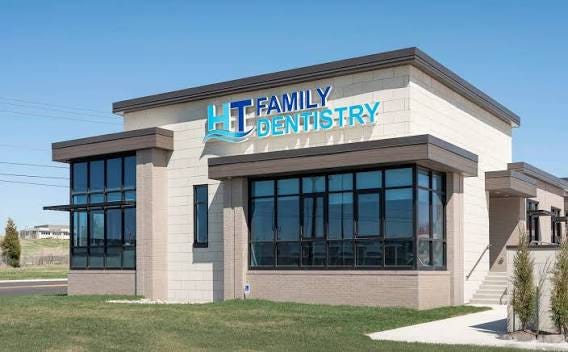
Meet HT Complete Family Dentistry
HT Complete Family Dentistry is home to Dr. Sarina Harman-Tinnel, Dr. Nicole Whitney, and Dr. Cassidy Garling.
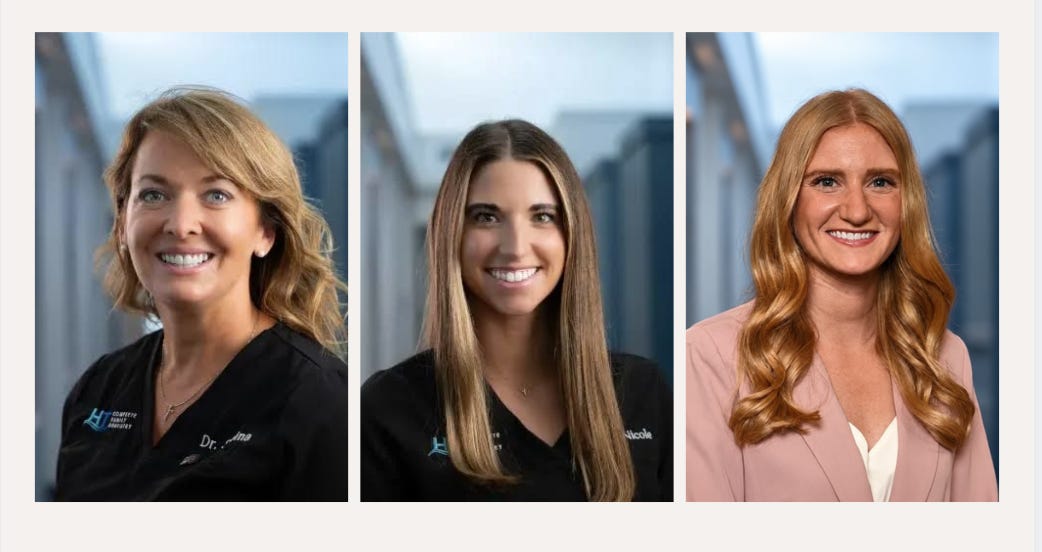
The practice emphasizes comprehensive dental care, patient education, and helping patients fully understand their treatment options. Dr. Whitney specifically emphasizes personalized care and helping patients feel supported throughout their dental journey, while Dr. Garling describes the satisfaction she finds in improving both the health and confidence of her patients.
Each dentist brings additional interests and experience to that comprehensive approach. Dr. Tinnel has additional training in dental sleep medicine and oral appliance therapy, which becomes important when we begin looking at the relationship between the mouth, airway, and sleep. HT’s sleep program specifically addresses sleep-disordered breathing and oral appliances. Together, these Kansas City dentists offer an example of how whole-person care can begin with oral health.
Oral cancer screening: what your dentist may notice before you do
One of the most important things screened during a dental examination may have nothing to do with cavities. Dentists have an opportunity to routinely see and feel tissues that patients cannot easily examine themselves. The American Dental Association recommends that clinicians obtain an updated health history and perform both an intraoral and extraoral visual and tactile examination in adult patients. When a suspicious spot is found, the ADA recommends biopsy or referral for further evaluation.
Oral cancer screening is a clear example of why a dental visit is more than a cleaning. Dentists also evaluate gum health, jaw movement, tongue and bite function. One of the first intersections of oral health and everyday function is looking at the jaw.
When the jaw becomes part of oral function
Healthy teeth are only one part of having a functional mouth. We also need jaw mobility to eat, brush and floss our teeth, yawn, speak comfortably, and tolerate dental treatment. The temporomandibular joints, commonly shortened to TMJ, connect the jawbone to the skull. Temporomandibular disorders, or TMD, can involve the joints themselves as well as the muscles used for chewing and other surrounding tissues. People may experience jaw pain, muscle tightness, clicking, headaches, difficulty chewing, or restricted mouth opening.
This is where dentistry may overlap with rehabilitation professionals such as physical or occupational therapists. Research on TMD supports the use of conservative rehabilitation strategies such as therapeutic exercise and, in selected cases, manual therapy to help improve pain, jaw mobility, and function (Idáñez-Robles et al., 2023; Vieira et al., 2023). The exact approach depends on the underlying cause, but when jaw pain or restricted oral movement interferes with eating, speaking, or oral hygiene, collaboration with rehabilitation professionals may be recommended.
A more significant restriction in mouth opening is known as trismus. Trismus can occur for several reasons, including impacted wisdom teeth, oral infections, trauma, TMD, and/or treatment for head and neck cancer. Surgery, radiation, pain, scar formation, and fibrosis can all contribute to decreasing jaw mobility. Trismus is an example of why interdisciplinary care matters. Measurement of mouth opening matters in the clinic, but as an occupational therapist, I am interested in how daily function is affected by a lack of proper jaw movement.
Research on rehabilitation for cancer-related trismus has examined exercise programs, jaw-mobilization devices, therapy, and other approaches. Results vary between studies, but exercise-based rehabilitation has been associated with improvements in mouth opening for some people with treatment-related trismus, although no single approach has been shown to be clearly superior. Depending on the need, care for restricted jaw movement may involve dentistry, oncology, occupational or physical therapy, speech-language pathology, and your primary care physician.
The tongue, oral function, and myofunctional therapy
Jaw function is only one part of oral function. A provider will look inside the entire oral space, particularly the movement and position of the tongue. The tongue participates in chewing, swallowing, speech, oral posture, and breathing mechanics. Its position and mobility can influence how a person uses the mouth throughout the day and during sleep.
One condition receiving increasing attention is ankyloglossia, commonly called a tongue tie, in which the lingual frenulum restricts tongue movement. The lingual frenulum is a fold of tissue connecting the underside of the tongue with the floor of the mouth.

Orofacial myofunctional therapy may be introduced during an oral exam. Myofunctional therapy uses targeted exercises and retraining involving the tongue, lips, and other muscles of the mouth and face. It may be incorporated into treatment for certain swallowing, oral posture, breathing, or functional concerns. A 2022 systematic review found potential benefits from myofunctional therapy in people with ankyloglossia, particularly when it was combined with appropriate surgical treatment, although the available evidence remains limited (González Garrido et al., 2022). A thoughtful, whole-person assessment asks how the tongue is moving, how the person functions and experiences tongue movement, and whether referral to another professional is appropriate.
Because the jaw, tongue and oral structures help shape the upper airway, evaluating oral function can sometimes lead to questions about sleep during a dental appointment. Dentists may notice findings such as significant tooth wear, grinding, severe dry mouth, or hear patients report loud snoring, morning headaches, or persistent daytime fatigue.
Obstructive sleep apnea occurs when the upper airway repeatedly narrows or closes during sleep, causing repeated interruptions in breathing, drops in oxygen, disrupted sleep, and physiologic stress throughout the night. An American Heart Association scientific statement describes OSA as common and frequently underdiagnosed in people with cardiovascular disease. It is particularly prevalent among people with hypertension, heart failure, coronary artery disease, atrial fibrillation, and stroke (Yeghiazarians et al., 2021). A multidisciplinary European scientific statement reviewing 445 studies concluded that severe obstructive sleep apnea approximately doubles the risk of an initial stroke, particularly in younger and middle-aged adults, and is also common among people who have already experienced a stroke (Bassetti et al., 2020).
Snoring does not automatically mean sleep apnea, and dentists do not replace medical sleep evaluations. Instead, this is another example of whole-person dentistry. At HT Complete Family Dentistry, Dr. Tinnel has completed additional dental sleep training and offers oral appliance therapy for appropriately selected patients. Professional guidelines from the American Academy of Sleep Medicine and American Academy of Dental Sleep Medicine emphasize an important division of roles: obstructive sleep apnea should be diagnosed and followed medically, while qualified dentists can provide and manage oral appliance therapy when it is appropriate.

The whole-person approach includes the patient experience
Discussing oral health can be a heavy topic, but whole-person care also considers how the patient feels during an appointment. HT Complete Family Dentistry offers a calm and comfortable experience. In a dentist’s office, there are bright lights, unfamiliar sounds, vibration, touch around the face and mouth, and periods when the patient cannot easily speak.
From an occupational therapy perspective, sensory regulation can help make an uncomfortable healthcare experience more manageable. This may include wearing sunglasses under the dental light, using headphones, requesting short rest breaks, changing positioning when possible, agreeing on a hand signal before treatment starts, or asking the provider to explain what is coming next. HT Complete even has zero-gravity full-body massage chairs available when patients wait for an in-office custom restoration to be completed, a small example of how the patient’s experience is curated.
There is research behind the idea that dental anxiety can be addressed rather than simply endured. A 2024 systematic review of 173 randomized controlled trials found that psychological and behavioral interventions can reduce dental anxiety, although the effectiveness varies by intervention and type of anxiety (Steenen et al., 2024). At HT Complete, patients are included in the experience and comfort of a whole-person visit.
Choosing a provider who is willing to listen, asking for accommodation to regulate the senses, and developing coping strategies before an appointment can all be part of taking care of your oral health.
How can occupational therapy help with oral health?
The overlap emerges when dental issues interfere with daily function. Swelling, fibrosis, jaw limitation, trismus, or sensory challenges may interfere with oral function and dental treatment. Someone who cannot comfortably open their mouth may have difficulty maintaining oral hygiene. I specialize in head and neck swelling or fibrosis following cancer treatment and offer intra-oral swelling management and rehabilitation of the jaw. Difficulty participating in dental care because of swelling, restrictions, limitations or sensory needs may be one reason to consider an occupational therapy evaluation.

Looking beyond the teeth
One thing I continue to appreciate about interdisciplinary healthcare is that different providers may be looking at different pieces, but they are caring for the same person. The dentist may be thinking about oral tissues, teeth, jaw function, or airway. The orthodontist may be thinking about structure and alignment. The sleep specialist may be thinking about breathing overnight, heart, and brain health. The rehabilitation professional may be thinking about mobility, swallowing, self-care, swelling, sensory regulation, or participation in everyday life. The whole-person approach connects providers together in providing you with excellent care. HT Complete Family Dentistry is much more than a traditional dentist office; their whole-person approach makes them a standout in Kansas City.
You can book your dental care and explore more services at HT Complete Family Dentistry at https://drtinnel.com
You can find occupational therapy for skin and brain at www.kcsunflower.com
Thanks for reading Sunflowerlymph Blog, Published in collaboration with The Whole Person Flow.
This post is public so feel free to share it.